


A violin by
Antonio Stradivari
One of the purest Golden Period violins.
We can read accounts from the late nineteenth century of dealers finding Stradivari violins in unspoiled condition. There are now but a handful that remain virtually pristine—many were lost in wars, many more stolen and never recovered, and countless examples survive only through the restorers’ art. W. E. Hill and Sons’ description, “We consider this violin entitled to rank amongst the best examples of the maker,” still rings true today.
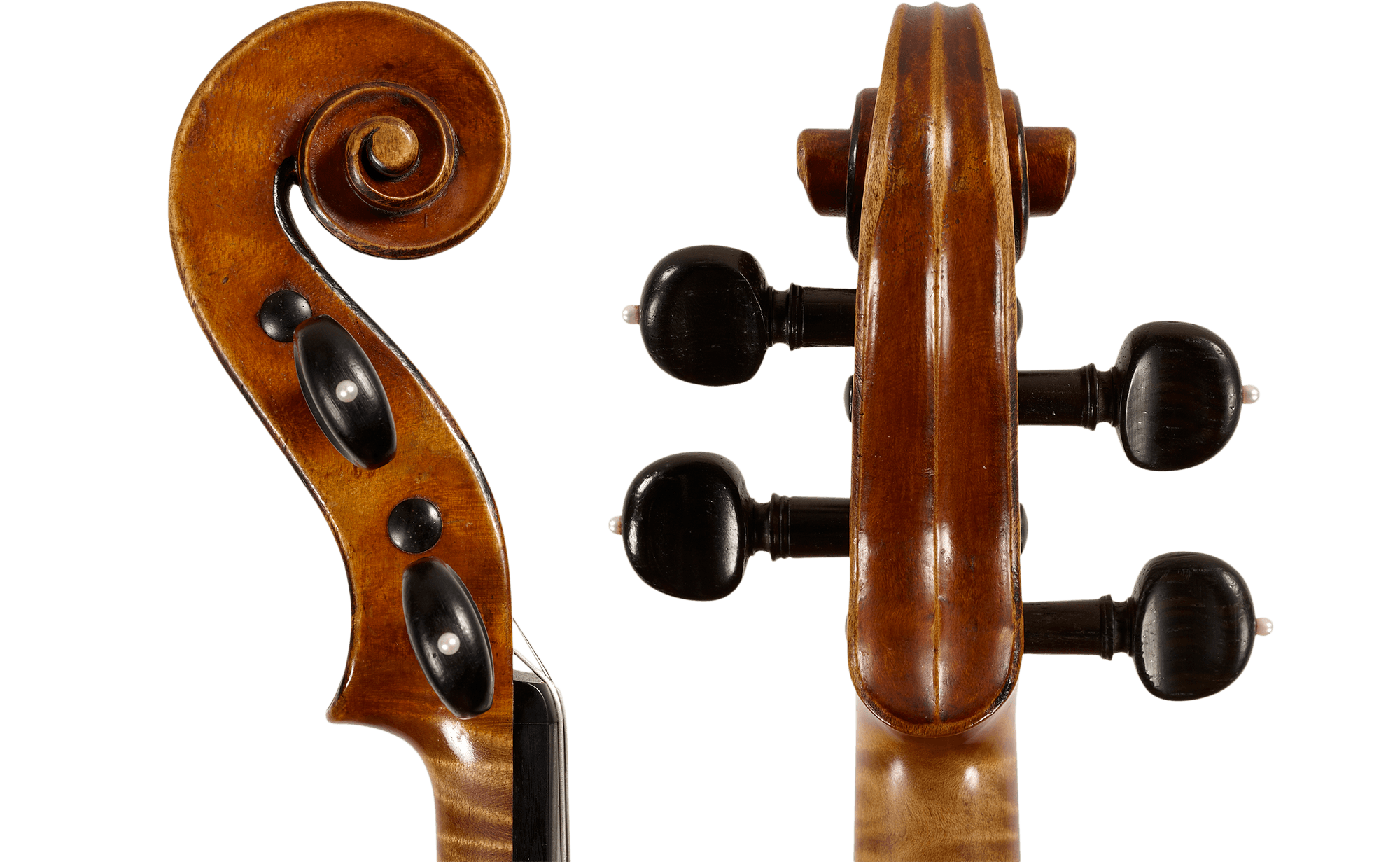
This magnificent 1717 violin has been cherished by every owner, passing through the hands of the most discerning collectors. The London dealer William Davis acquired the violin from a Mr. Harper in 1839 and sold it the following year to Edward Tyrrell. Tyrrell, a “City Remembrancer” - chief officer of the City of London Corporation - owned a second Stradivari of 1717, (acquired in 1844) as well as the celebrated “Medici” contralto viola of 1690. Both violins passed to his son, Avery Tyrrell, upon Edward’s death in1832. When the younger Tyrrell died in 1906, the firm of W. E. Hill and Sons received the instruments.
After a brief interlude in the collection of the industrialist Frederick Smith, the Hills sold this 1717 violin to George D. Neill in 1911. It was later acquired from Neill’s estate by the great collector Richard Bennett, who in 1927 was nearing the end of his life. From that time, until the end of the Second World War, it remained under the vigilant care of Hill & Sons. In March 1946, Clarence Payne, an eminent collector who also owned the 1721 “Lady Blunt,” acquired the violin. Two years later he sold the “Tyrrell” privately to Gerald Segelman a businessman from Leeds who acquired a vast collection of instruments throughout his lifetime.
Upon Segelman’s death in 1992 the violin was sold by the dealer Peter Biddulph to the Chicago collector Howard Gottlieb. In 2006, Rare Violins of New York facilitated its sale on behalf of Gottlieb to Jay Dweck, a financial-technology consultant and amateur violinist. It has since returned to Europe under the guardianship of an appreciative private collector. The “Tyrrell” was prominently featured by Charles Beare in the landmark 2013 exhibition at the Ashmolean Museum in Oxford, where it was displayed alongside the “Messiah” of 1716 and the “Lady Blunt” of 1721 - rightfully earning its place among Stradivari’s most illustrious creations.