


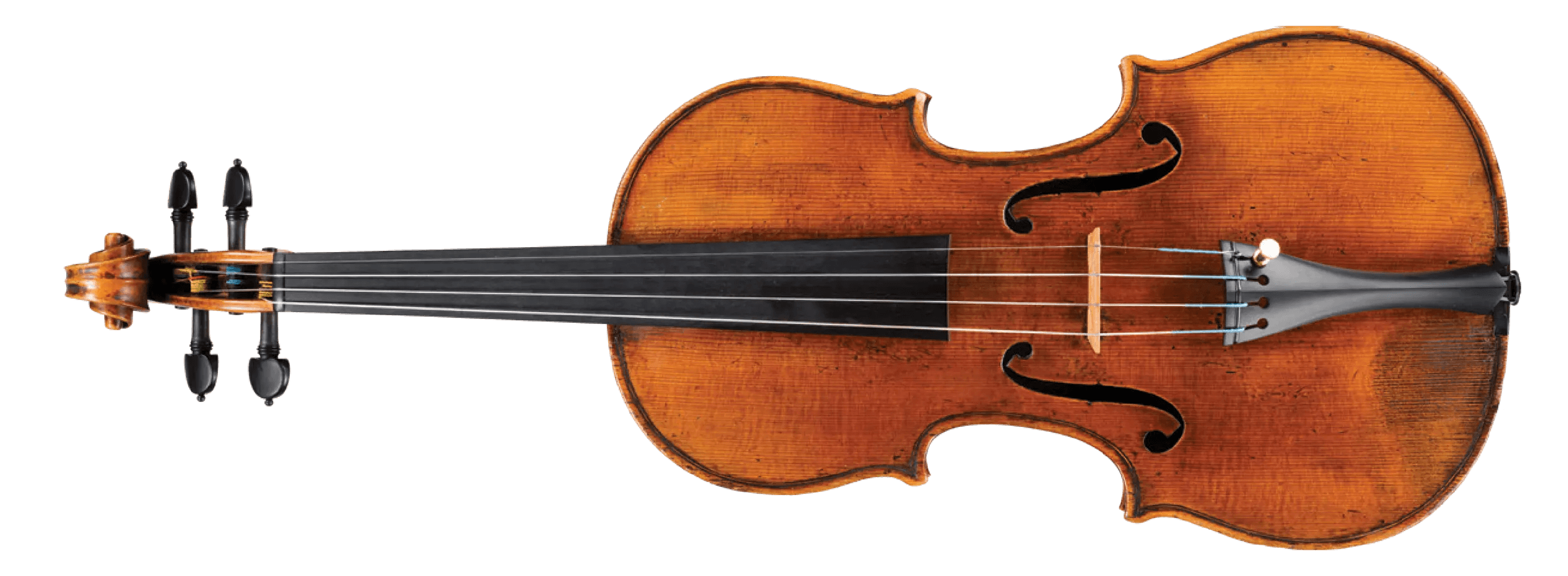
A violin by
Antonio Stradivari
The earliest record of the violin’s history indicates that it was first owned by General Lamorliere who reportedly sold it to Baron de Tremont. Presumably this Baron de Tremont was the French nobleman, Louis-Philippe-Joseph Girod de Vienney (1779-1852), an amateur violinist and patron of the arts who had met Beethoven and was a friend of Berlioz. His musical soirees attracted the finest musicians of the day including Frederic Chopin.
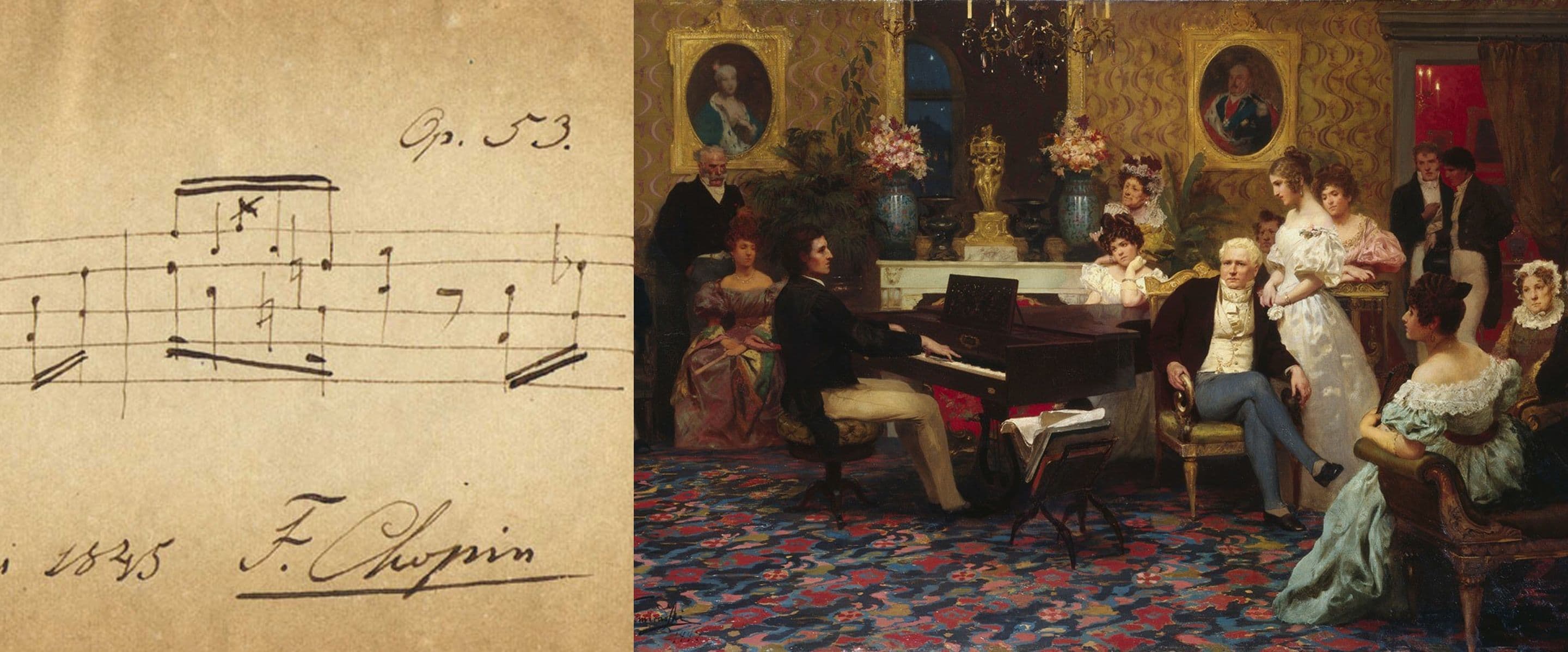
In 1870 the Stradivari was in the possession of a professional violinist named Hermann in Paris. It was subsequently purchased by the firm of Gand & Bernardel of Paris in 1879 and sold to an English amateur, Caspar Gottlieb Meier (1837 – 1915) for £480. Meier, who is mentioned in the Hill & Sons’ book on Stradivari, was a well-known collector who purchased five Stradivari violins and a cello from Gand and Bernardel. Meier sold the violin to George Hart who subsequently passed it on to George Ames in 1886.
George Ames (1827 – 1893) belonged to a well-known family of bankers and ship-owners from Bristol in the west of England. He was a talented violinist and pupil of Bernhard Molique. He met his wife in Dresden where he’d gone to study. She was the eldest daughter of Alexander von Hanstein, Count von Poelzig of Saxe-Altenberg, and stepbrother of Prince Albert, the husband of Queen Victoria. Ames owned the Stradivari for just the last seven years of his life.
After the death of George Ames in 1893 the Stradivari was put up for sale at the auction house of Puttick & Simpson. It was unquestionably the focal point of the sale which included lots from one of the most important collectors of the day, Mr. Richard Bennet. The violin was purchased by Hill & Sons for £840.
The private diaries of the Hill family reveal a serious conviction of the firm to acquire the very finest examples of the top makers whenever possible, so as to secure them and insure their safety. Over the next 17 years Hill sold and repurchased this violin three times, firstly to Pickering Phipps III (1861 – 1937), whose family were politicians and owners of a brewery in Northampton. The Stradivari belonged to Phipps at the time of the publication of the Hill Book in 1902. The violin was purchased back by Hill in 1905 and sold in the same year to a Mr. von Donop. He later traded it back to Hill who sold it once again, this time to Mr. D. T. Brown of Liverpool. He kept the violin until the Hills repurchased it in 1910.
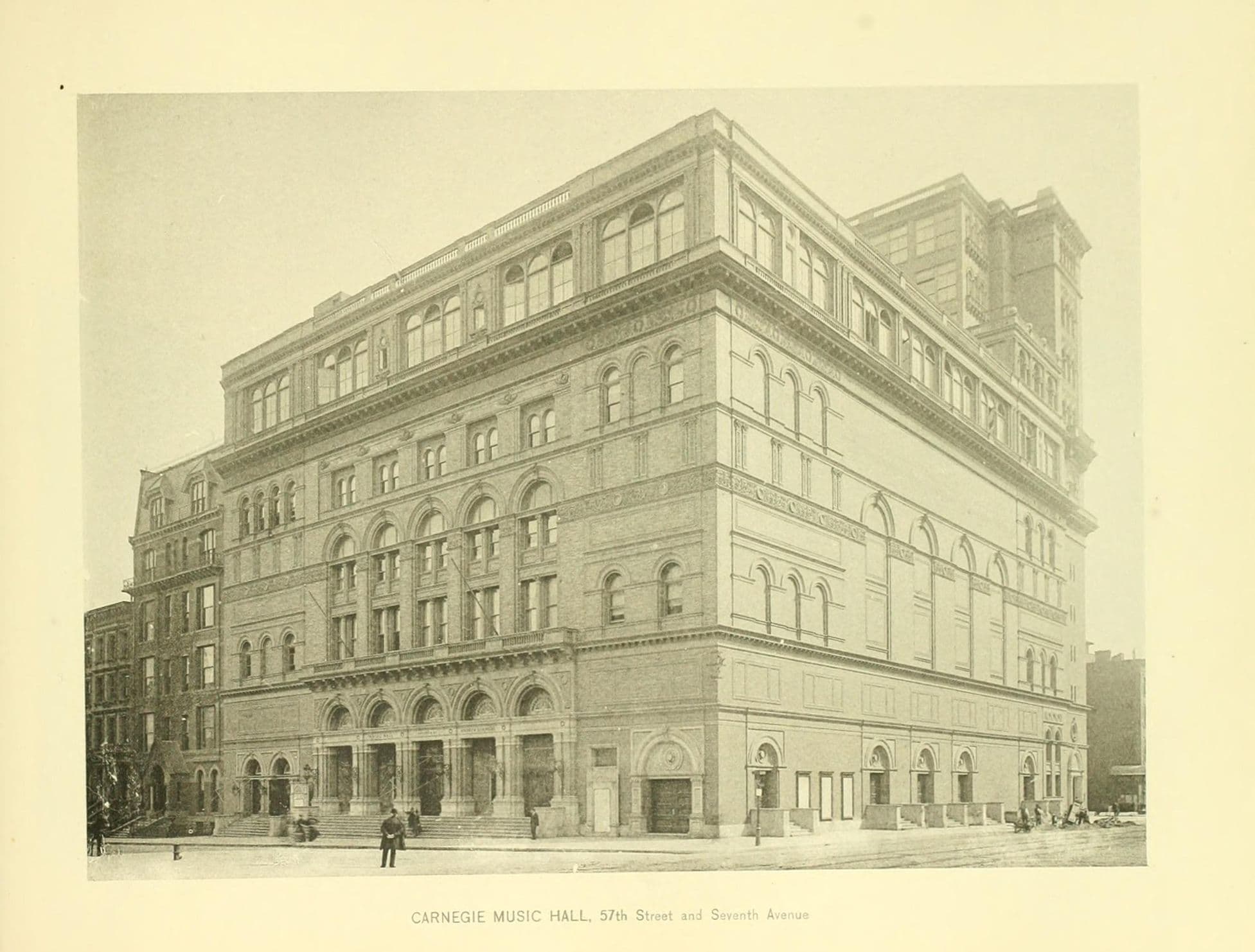
Later that year the Stradivari was sold to Emil Hamma of Stuttgart who immediately passed it on to Ernst Kessler of Berlin. Several years later Alfred Hill tried unsuccessfully to buy it back. Kessler instead sold it to another Berlin dealer Emil Herrmann and certified the “Ames”, as it was now being called, in July 1916. The economic pull of the United States, which had already drawn so many great works of art out of Europe, finally brought the Stradivari to New York in 1924 where Emil Herrmann opened a new shop next to Carnegie Hall on West 57th Street.
Herrmann sold the violin to Mr. Leslie W. Brown (1862–1941) of Utica, NY in February 1925. Leslie Brown was a fine amateur violinist who in 1884 had entered his father’s cigar-making firm of L. Warnick Tobacco. As an exceedingly successful businessman Leslie Brown also became the Director of the First National Bank of Utica. It was to Leslie Brown that Alfred Hill wrote his certificate and letter in 1936.
Totenberg’s solo career brought performances with all the leading orchestras including the Amsterdam Concertgebouw, Berlin Philharmonic and London Philharmonic in Europe as well as the Chicago Symphony, Boston Symphony, Los Angeles Philharmonic, New York Philharmonic and Cleveland Orchestra in the U.S. He collaborated with many luminary conductors including Jochum, Kubelik, Monteux, Stokowski and Szell and gave recitals with the likes of Arthur Rubinstein and Karol Szymanowski. He was a founding member of the Alma Trio and his performing and teaching was highly sought after by the most prestigious schools and festivals.
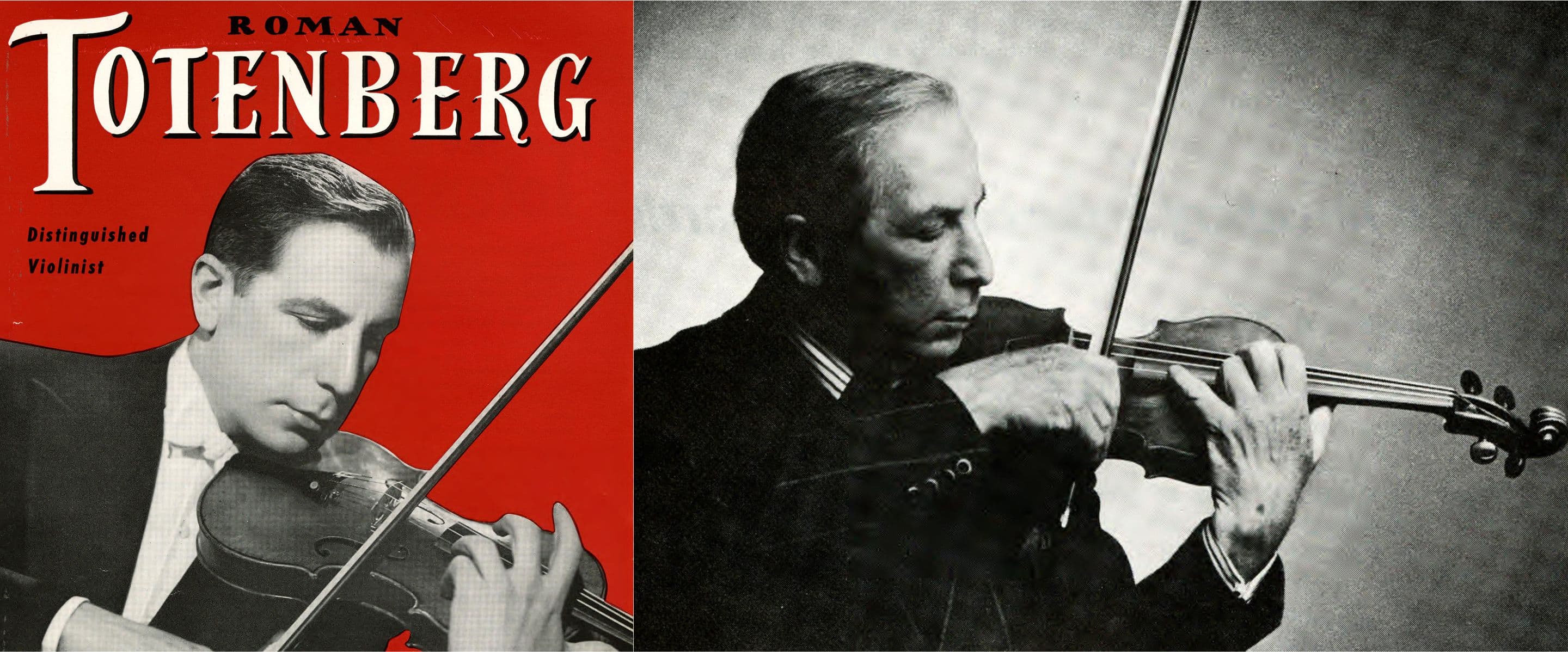
The Stradivari violin was Roman Totenberg’s close companion during the height of his career, touring the world and recording extensively. On May 13, 1980, after a concert he gave at the Longy School of Music in Cambridge, Mass., the violin was stolen from his office. The thief, Philip Johnson, had been a former student of Joseph Silverstein at Boston University and even though he was the only suspect, the police felt there was not enough evidence to search his apartment. Had they done so a 35-year mystery would have been avoided. Not until after the death of the thief was the violin recovered in 2015, three years after Roman Totenberg passed away.
In 2017 the violin was sold through Rare Violins of New York, and was the inaugural instrument of In Consortium. It is currently on loan to violinist Yeson Sophie Lee with the help of Dr. Ryuji Ueno.